A mechanical watch is a precision mechanical device that keeps time through energy storage (via a mainspring), gear transmission, and balance wheel regulation; they are primarily categorized into manual-wind and automatic models. Operating Principles: The power source system (mainspring) stores energy and drives the entire watch. The gear train consists of high-precision gears that transmit and amplify the mainspring’s energy to the hands. The escapement and regulation system—comprising the escapement mechanism and the balance wheel/hairspring assembly—controls the release of energy in a regular, second-by-second manner to ensure stable timekeeping. Classification: Manual-wind watches require the user to turn the crown to wind the mainspring, typically once a day. Automatic watches feature a built-in semi-circular rotor (or oscillating weight) that rotates with the movement of the wearer’s arm during daily use, automatically winding the mainspring. Usage and Maintenance: Timekeeping accuracy—influenced by temperature, magnetic fields, and gravity, mechanical watches naturally deviate by a few to several dozen seconds per day and are less precise than quartz watches. Power replenishment—automatic watches should ideally be worn for at least eight hours a day; if the watch stops due to prolonged inactivity, it must be manually wound before being worn again. Water and magnetic resistance—keep the watch away from strong magnetic fields (such as speakers or magnetic clasps) and be mindful of its water-resistance rating to prevent water ingress or moisture damage.
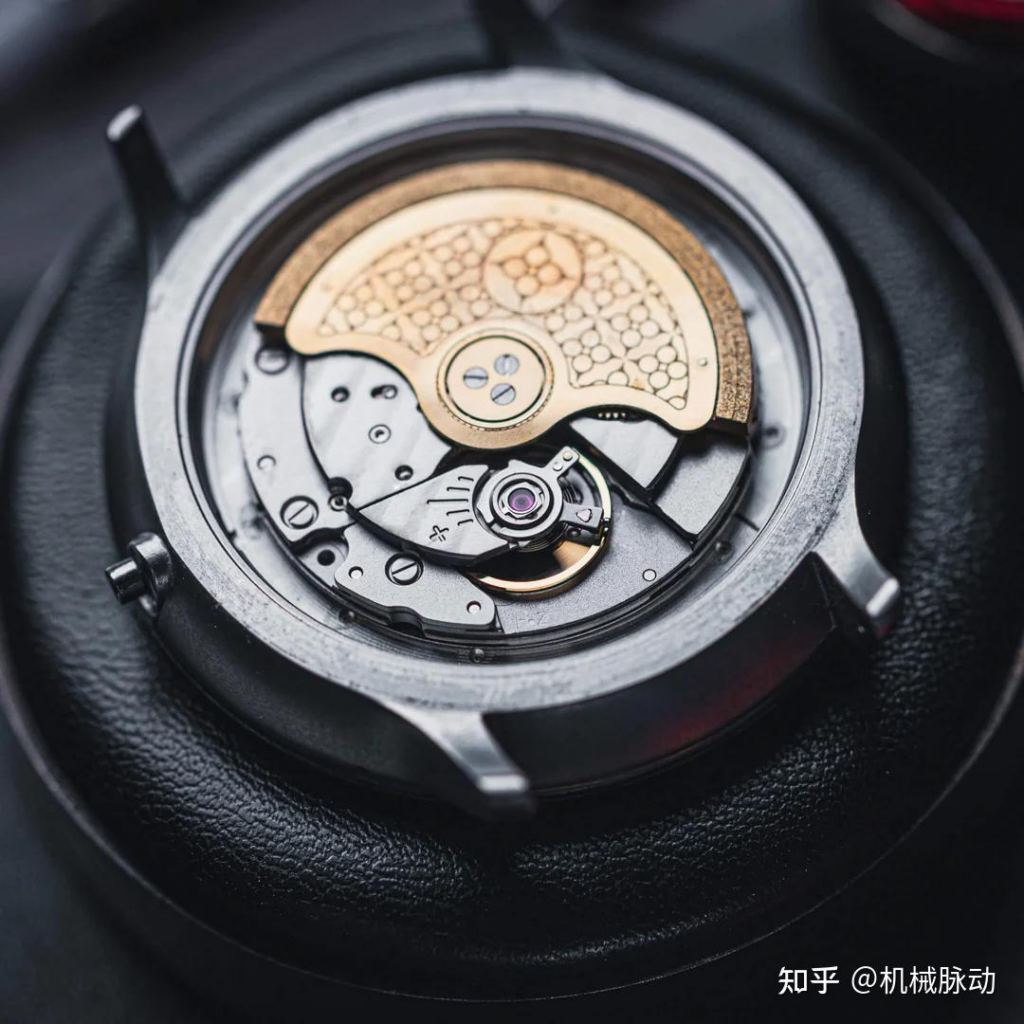
The movement of a mechanical watch is one of the most complex mechanical devices on Earth.
Hundreds of components are packed into a space no larger than a beer bottle cap.
It runs reliably for long periods without a battery—so what exactly makes it tick?
I will explain the key components and working principles of a mechanical watch movement in the simplest, most accessible terms.
The full text is approximately 1,500 words; reading time is about 6 minutes.
- Basic structural modules of a mechanical watch (simplified version)
Let’s start with a brief look at the core modules of a mechanical watch:
Module Name Function
Winding System Injects energy into the barrel
Mainspring Stores mechanical energy; acts as the power source
Gear Train Transmits power and distributes it precisely to the hands
Escapement System Controls the rhythm of energy release, creating the watch’s steady “tick-tock”
Balance Wheel System Stabilizes oscillation frequency—acting like a “heartbeat”—to ensure accurate timekeeping
Hand System Driven by the gear train; displays time information (hours, minutes, seconds)
When you turn the crown, you are essentially “winding” the watch.
The tightened mainspring acts like a fully drawn bow, slowly driving the connected gear train.
These interlocking gears transmit energy much like a row of falling dominoes.
However, the escapement mechanism is the crucial part: it acts like a precision braking system, chopping the energy released by the mainspring into small “tick-tock” intervals,
driving the balance wheel to oscillate rhythmically, and ultimately causing the hands to advance precisely, step by step.

Don’t worry if you don’t fully grasp it yet; I’ll explain the details later.
- What is winding? Why is it necessary?
“Winding” is the process of adding energy to the mainspring. Manual Winding
Animated GIF Cover
Crown and winding system
Requires manually turning the crown daily to drive the winding gears and tighten the mainspring.
Common in traditional dress watches, vintage timepieces, and some high-end tourbillons.
Cons: Easy to forget to wind, leading to increased timekeeping errors or the watch stopping.
Pros: Tactile engagement and a sense of ritual; simple structure and low maintenance costs.
Automatic Winding
Rotor (gold-colored part)
Equipped with a semi-circular rotor (the gold part shown above) inside the watch; it utilizes wrist movement to rotate gears and wind the mainspring.
Automatic watches can usually be wound manually as well, though a small number of models omit this feature to simplify the structure.
Automatic watches continuously replenish mainspring energy; wearing the watch daily is sufficient to maintain power.
- The Mainspring—The “Power Source” of a Mechanical Watch
What is the mainspring?
A very long, thin metal spring coiled inside a “barrel.”
During winding, the spring is coiled tighter and tighter.
Upon release, it slowly unwinds, delivering steady mechanical energy.
Animated GIF Cover
Mainspring
So, the question arises!
How is the released energy controlled?
In other words, how does turning the crown for less than half a minute allow the hands on the dial to keep ticking energetically for days on end?
This is precisely regulated by the “gear train” and the “escapement system” discussed next.
- Gear Train: The Power Transmitter
Mechanical watches contain a precision gear train that transfers the energy released by the mainspring to the hands:
Animated GIF Cover
Gear Train
Gear Name Function
Minute Wheel Usually rotates once per hour; drives the minute hand.
Third Wheel Intermediate transmission.
Fourth Wheel Usually rotates once per minute; drives the second hand.
Escape Wheel Works with the escapement system to control the rhythmic release of energy.
These gears feature highly precise ratios, ensuring the accuracy of the time display. For example: – Seconds wheel: one full rotation = 60 seconds – Minutes wheel: one full rotation = 60 minutes – Hours wheel: one full rotation = 12 hours
- The Escapement System: Preventing the mainspring from unwinding all at once
Without the escapement mechanism, the mainspring would instantly release all its energy—uncoiling violently like a released spring—and the watch would essentially “explode.”
Animated GIF cover
Functions of the escapement mechanism:

Chops up the energy released by the mainspring, letting it out bit by bit
Works with the “balance wheel system” to release energy rhythmically → creating the “tick-tock” sound
The escapement system acts like a “throttle valve,” preventing energy from flowing out too quickly.
It also controls the watch’s beat, serving as the pacer for the “ticking” of the seconds hand.
- How are the hands driven?
After the power undergoes the series of transformations mentioned earlier, it is precisely transmitted to the axes of the hands:
Animated GIF cover
Seconds hand: Connected to the fourth wheel axis; rotates once per minute
Minutes hand: Driven by the center wheel; rotates once per hour
Hours hand: Driven via the hour wheel system (using a gear reduction ratio); rotates once every 12 hours
The entire process involves precise calculations; if the gear ratio of even a single intermediate gear is incorrect, the timekeeping will be inaccurate.
In a nutshell
Mechanical watches rely on “winding” to tighten the mainspring; energy is then released rhythmically through a combination of gears, the escapement, and the balance wheel, ultimately driving the precise rotation of the hands.
It is an art form based on purely mechanical structures
A fusion of physics, micro-engineering, and the philosophy of time
And that is precisely why so many people love them.